Een overeenkomst van betekenis
Een overeenkomst is een meerzijdige rechtshandeling waarbij twee of meerdere partijen een verbintenis aangaan. Een overeenkomst is meestal vormvrij en kan ook mondeling zijn gesloten. Hier zijn uitzonderingen op. Bijvoorbeeld bij de koop van een woning door een particulier. Een overeenkomst is de overeenstemming van wil tussen partijen waardoor afdwingbare rechten tussen partijen ontstaan of tenietgaan waarbij rechten of overdrachten van zakelijke rechten en/of persoonlijke vorderingsrechten worden beoogd en waaruit rechten en/of verplichtingen voortvloeien. 


Relevantie relevantie: relevance; usefulness; appropriateness; Wiktionary: relevantie → relevance; relevantie → relevance, pertinence, agreement.

- Een overeenkomst van betekenis Een overeenkomst is een afspraak tussen twee of meer partijen over wat ze met elkaar of voor elkaar zullen gaan doen of laten. Partijen kunnen zowel natuurlijke personen zijn als rechtspersonen. Bij rechtspersonen kan je denken aan bijvoorbeeld BV’s of NV’s.
Significant verschil
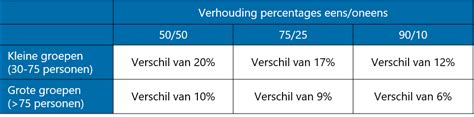
Hoe toets je voor statistische significantie? Bij kwantitatief onderzoek worden de verzamelde data geanalyseerd door middel van hypothesetoetsing. Dit is een procedure om te beoordelen of een verband tussen variabelen of een verschil tussen groepen statistisch significant is. Stel een bedrijf verstuurt een enquête naar ontevreden klanten. Het bedrijf kan een statistisch verschil opmerken in het totale aantal vrouwen en mannen die het product slecht vonden. Een statistisch significant verschil betekent een groot verschil tussen de twee groepen: groot genoeg om niet willekeurig of toevallig te zijn. Significant verschil In de wetenschap is het gebruikelijk dat p-waarden verschil weten aan te tonen minder vaak gepubliceerd. Probeer toch te vermijden dat je gaat zoeken naar significante resultaten.Statistisch significant
If the p value is lower than the significance level, the results are interpreted as refuting the null hypothesis and reported as statistically significant. Usually, the significance level is set to or 5%. That means your results must have a 5% or lower chance of occurring under the null hypothesis to be considered statistically significant. Researchers focusing solely on whether their results are statistically significant might report findings that are not substantive [46] and not replicable. [47] [48] There is also a difference between statistical significance and practical significance. A study that is found to be statistically significant may not necessarily be practically.Statistisch significant In research, statistical significance measures the probability of the null hypothesis being true compared to the acceptable level of uncertainty regarding the true answer. We can better understand statistical significance if we break apart a study design.[1][2][3][4][5][6][7].
Impact
Learn the meaning and usage of the word impact as a noun and a verb, with synonyms, example sentences, word history, and related phrases. Find out why impact is a valid verb form and how it differs from collision, shock, and concussion. Learn the meaning of impact as a noun and a verb in English, with examples of usage and synonyms. Find out how to pronounce impact and how to use it in different contexts and domains.Impact Learn the meaning and usage of the word impact as a noun and a verb in English. Find out how to use impact with different prepositions, synonyms, and examples.